
Here’s the number that should change how you hire: the national unemployment rate for accountants and auditors is sitting at 1.0%, according to the Bureau of Labor Statistics — against a national average of 4.3%.
That’s not a tight market. That’s barely a market at all.
If you’ve posted a role for a staff accountant, bookkeeper, or finance analyst recently and watched strong candidates disappear within days, this is why.
It’s not you. It’s the math. And it’s exactly why partnering with an accounting and finance staffing agency that already knows this market matters more than ever.
Here are the finance and accounting recruitment trends shaping the workforce, and what to do about each one.
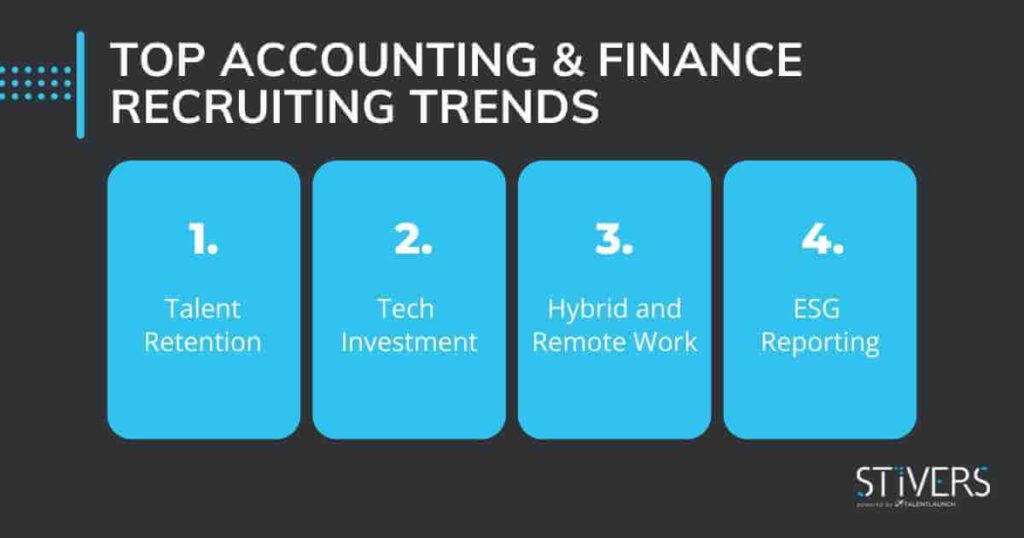
Trend 1: Accounting Candidates Are Hard to Hire (and Keep)
Consider this scenario: a highly skilled financial analyst, with a knack for data-driven insights, has been an asset to your organization for years. Then they start fielding calls from companies implementing new AI and machine learning tools — tools they’ve been wanting to work with.
They agree to a couple of exploratory conversations. Is your company positioned to keep them, or is someone else about to make a better case?
A Deloitte study confirms what most leaders already feel: retention pressure is still sky-high. Roughly half of accounting and finance professionals say they’d leave for the right offer. They’re not unhappy, but they’re curious, and they have options.
It’s a structural squeeze. The number of CPA exam candidates has fallen 27% over the past decade, accounting graduate numbers keep sliding, and roughly three-quarters of accounting professionals are within 15 years of retirement.
The talent pool feeding this field is shrinking from both ends at once.
But this cuts both ways. Finding the best accounting and finance talent in a market this competitive isn’t just about keeping the people you have — it’s about how hard it’s gotten to hire anyone new.
“Accounting competition is fierce. Good candidates are fielding multiple offers before most companies finish a first round of interviews, counteroffers can land within 24 hours of a resignation conversation, and a search stretches out fast the moment a hiring team moves slower than the market does.”
Lindsay Pfenning, Stivers Chief Operating Officer
Trend 2: Technology Is Fueling the Competition for Finance Talent
New data from PwC shows that 58% of CFOs are increasing their investments in AI and advanced analytics not just to cut costs, but to stay attractive to tech-savvy talent.
51% of CFOs also cite talent shortages as one of the top three barriers to executing their finance strategy. The technology race and the hiring squeeze aren’t two separate problems — they’re the same one.
Algorithms now analyze massive data sets in seconds, allowing finance teams to focus more on higher-value analysis than spreadsheets and data cleanup.
The “touchless close” is becoming standard practice, minimizing human intervention and reducing end-of-month fatigue.
But remember: automation doesn’t mean elimination. It means the role itself is shifting, and candidates want to work somewhere that’s investing in that shift, not resisting it.

Trend 3: Remote and Hybrid Work Is Here to Stay
Gallup’s research puts hybrid work at roughly 51–52% of remote-capable employees, with another 27–28% fully remote and the rest on-site. That split has held steady for a while now rather than continuing to climb.
Flexibility isn’t a rising trend anymore; it’s a settled expectation.
For hiring managers, that stability is the point: flexibility isn’t a perk you’re weighing — it’s a filter candidates are applying before they even respond to an outreach message.
Trend 4: ESG Reporting May Change Who to Hire
ESG reporting—environmental, social, and governance metrics—is asking finance professionals to fold non-financial data into financial storytelling. That’s creating demand for a broader skill set: sustainability reporting, stakeholder analysis, cross-department collaboration.
Global frameworks like CSRD and ISSB keep expanding, but the U.S. picture is more contested than a straight “gaining momentum” story. A federal appeals court recently paused enforcement of California’s climate-risk disclosure law pending appeal.
The skills demand is still real; the regulatory ground it’s standing on is shiftier than it looks.
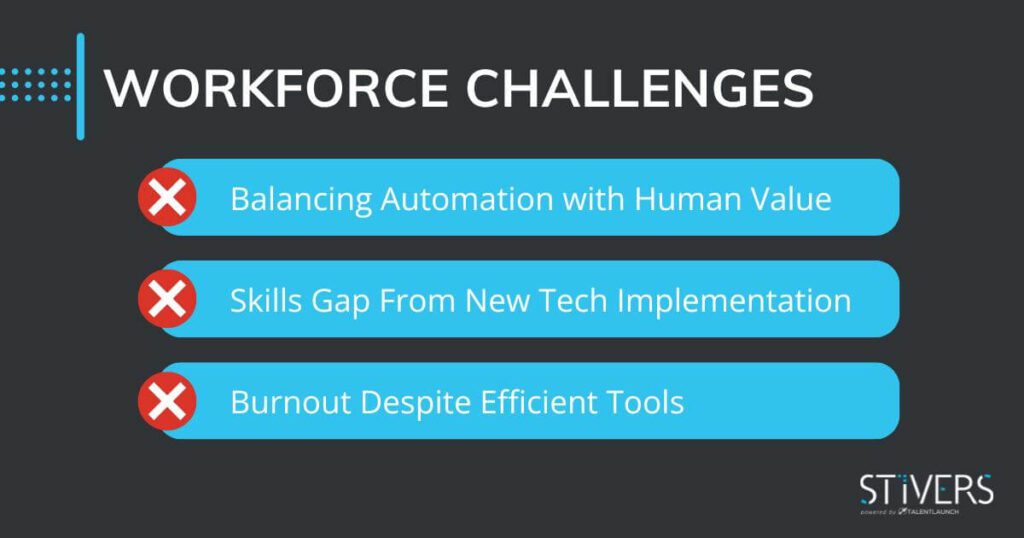
What Can You Do About Accounting and Finance Hiring Challenges?
While the industry embraces these trends, challenges persist. By proactively addressing these concerns, your organization can create a work environment that attracts and retains top talent while fostering employee well-being and productivity.
Balance Automation with Human Value
Technology is moving fast, but it still can’t replace human intuition, strategic thinking, or nuanced decision-making.
The key isn’t replacing your team, it’s empowering them to do higher-value work. That means helping your finance professionals shift from manual tasks to more strategic roles.
What You Can Do: Focus on upskilling your workforce with training in data analysis, AI tools, and digital finance systems. Clarify how each role contributes to business strategy in a tech-driven environment so employees understand the value they bring beyond the spreadsheet.
Close the Skills Gap
The accounting and finance world is changing faster than traditional training can keep up. As companies adopt AI, automation, and ESG reporting, many professionals are playing catch-up and creating a noticeable skills gap.
What You Can Do: Build a proactive talent development plan that goes beyond onboarding. Invest in continuous training and mentorship, and if possible, collaborate with colleges or training programs to help shape the next generation of tech-savvy finance professionals.
Tackle Burnout
Even with new tools designed to make life easier, the pressure in accounting and finance hasn’t let up…especially during tax season or year-end crunch time.
As teams take on new technologies and processes, they may find themselves stretched thinner than ever.
What You Can Do: Support your team with a flexible work culture, practical mental health resources, and clear boundaries around time off. Smart workload management (yes, even spreadsheets have limits) can help your leaders keep an eye on employee well-being—and intervene before burnout leads to turnover.
Boost Your Hiring Strategy with Accounting Recruiters
Hiring the right talent has never been more competitive or critical. That’s why accounting and finance recruiters still matter.
A recruiter with deep industry insight (and access to a constantly refreshed candidate pipeline) can help you:
- Identify the best-fit professionals faster
- Reduce time-to-hire
- Stay current on competitive benchmarks
At Stivers, we combine proven processes with smart tech, including AI-driven tools and chatbot-enabled candidate screening.
Only 13% of candidates make it through our vetting process. That’s how we achieve a 97% retention rate for direct-hire placements.
With hundreds of candidate conversations happening in real time, our recruiters can identify top contenders for your roles quickly and confidently.
Blending human insight and technological efficiency ensures that you get the best of both worlds.
Let’s Build Your Future Workforce
The accounting and finance space is transforming fast. Hiring managers who stay ahead of the trends—talent expectations, tech innovations, and remote work dynamics—are the ones who will build more agile, engaged, and future-ready teams.
Whether you’re trying to retain key talent or hire for newly evolving roles, Stivers has the people, the tools, and the expertise to help you succeed.
Need to move faster on your next accounting or finance hire? Talk to a Stivers recruiter who knows the market in Cleveland and beyond.